Guillermo del Toro’s film
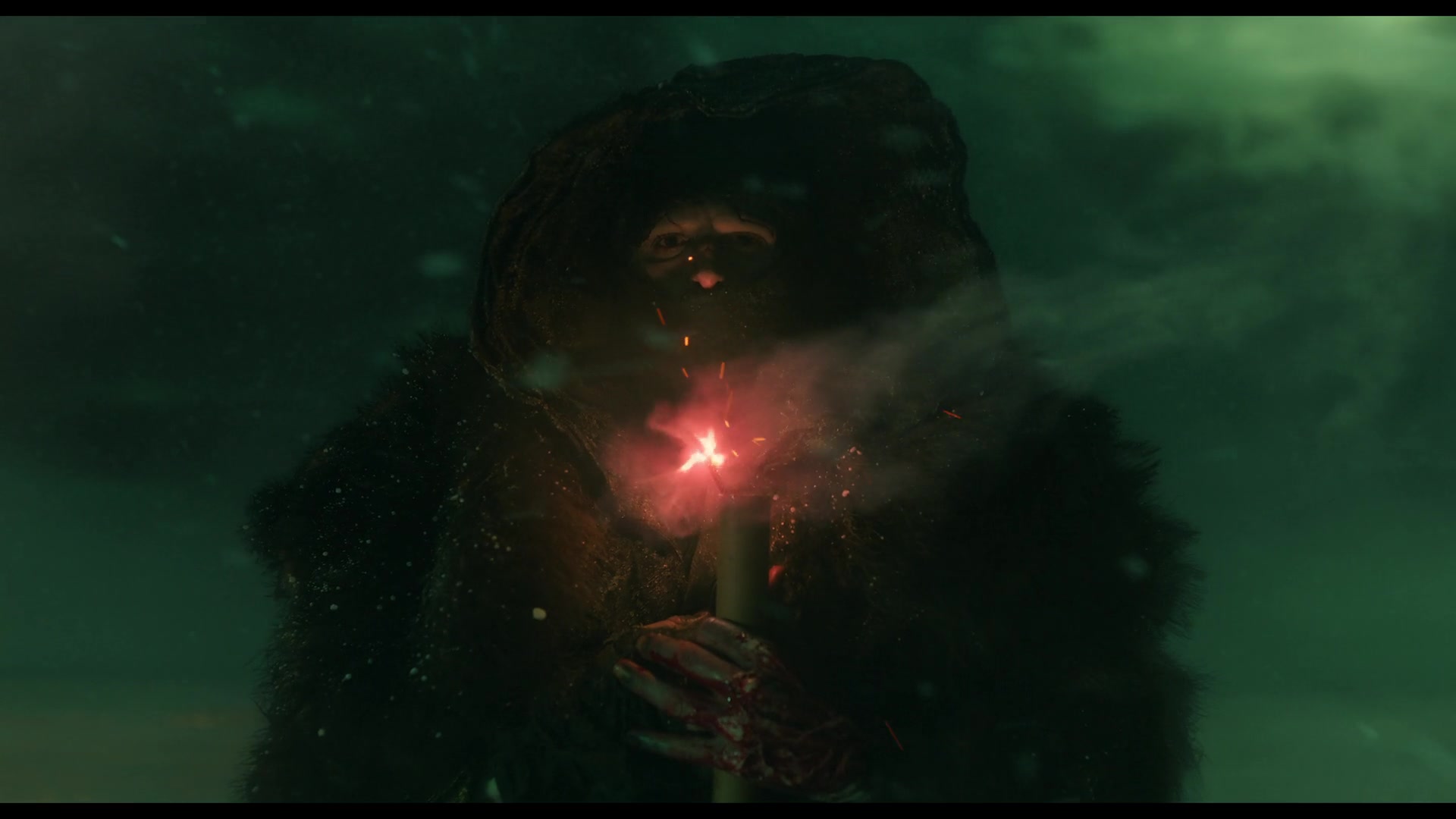
On New Year’s Day, my sister and I sat down with cups of hot cocoa (for which I spilled milk all over my stove for, but that’s a story for another day) and watched Guillermo del Toro’s Frankenstein. I initially wanted to watch it because it looked beautiful (it genuinely blew my mind—you should go watch the film on Netflix, then watch the behind the scenes documentary), but it ended up being an experience that changed the way I see art and life, and existence itself.
a clever frame narrative
For anyone who hasn’t read the novel or seen the film, yet, allow me to set the scene. The film opens with a ship stuck in harsh, wintry weather. Its crew, seeking freedom from the unyielding cage of ice, works hard to dislodge the ship. As they do so, they find an injured man and bring him on board. Not long after, a vicious beast attacks, hellbent on reaching the incapacitated man. The ship’s captain harbors him in his quarters, and, so, Frankenstein’s story begins.
Victor Frankenstein is a mad scientist, traumatized by his mother’s death and his father’s harsh discipline, obsessed with defying fate itself by reanimating the dead (side note: I am convinced Arcane’s Viktor has to be inspired by him). He succeeds in creating the Creature, who he then mistreats—his only interest was the conquest of death, not the birth of new life. Once he reaches his objective, he is disgusted by the dull newborn before him, and he casts him aside to be discarded like the decaying bodies he was born from.
At this point, Frankenstein pauses to converse with the captain. The Creature storms into the room, infuriated, searching for his creator. It is his turn to tell his tale.
Frankenstein had believed the Creature dull and stupid, when all the Creature wanted was connection and to understand the surroundings he’d been born into. He eventually escapes captivity when Frankenstein blows up his entire laboratory to dispose of him. Hunted and afraid, he hides in a family’s basement, where he eventually becomes friends with a blind old man. The man teaches him how to read and urges him to seek the origins of his own existence. The Creature discovers the clinical documentation of his ragged construction in the ruins of Frankenstein’s laboratory, then returns home to find the old man—his only friend—ravaged by wild wolves. Experiencing existential dread, agony, and grief, he seeks out his creator, his father, to ask for a companion in life. His life immortal and his existence wretched, it would only be fair that he not have to face the pain of living in complete solitude. He is only faced with cold and cruel rejection.
Unsatisfied and angry, he pursues Frankenstein to the end of the earth, begging for the sweet release of death, which Victor has naught the power to grant.
And we return to the confrontation on the ship.
The Creature despises himself, thinks himself unworthy of life, yet incapable of death. He exists in the limbo between paradise and the underworld, unable to reach either no matter how long his weary travels. After hearing his story, Frankenstein realizes his wrongdoings and repents. He affirms the Creature’s permission to simply exist.
The Creature chooses to forgive as his father exhales his final breath. The Creature chooses to live with a new perspective.
The sun rises, and the story comes to a close.
you have the right to exist, even if you didn’t choose to be born
Desire is the root of all suffering. Yet, suffering is an inevitable part of life, from which one endlessly seeks refuge. But perhaps there is refuge in accepting suffering and living in spite of it.
Frankenstein’s monster is a gentle, innocent, and intelligent soul who grows cruel due to his creator’s mistreatment and unguided existential agony. Though he did not ask to be born, he is forced to exist agains his will, a predicament many of us might find ourselves in (oh to be born a fish, or perhaps a bird, or any creature unafflicted by the woes of society, really!). Ultimately, his father acknowledges his existence, and thus, he is released from purgatory and enters a new experience of the world. The fundamental human desire for acknowledgement, and the fulfillment of it, sets him free and uncovers for him the beauty of existing, not as a ghost, but as a fully recognized, whole being.
But I think the beauty of it really lies in the fact that one can be acknowledged even without the presence of another. As long as one gives oneself the permission to be.
(I love gothic horror because it highlights how monstrous humans can be, and how human monsters can be. Perception is poison, and literature is the antidote that forces us to gaze into the abyss of our psyches and wake up.)
what’s next
I’m ashamed to say that I haven’t read the original novel yet. I’ll be getting on that soon, after I finish Algospeak and the Mahabharata.